



Planning for the future can be complicated, especially when it comes to healthcare decisions.
To help, Cheshire Medical Center’s Family & Community Care clinic (FCC) recently launched a pilot program to help patients with advance care planning, ensuring they receive the end-of-life care they want before a health crisis leaves them unable to speak for themselves.
Advance care planning is an ongoing process that includes preparing for future medical decisions, talking with your loved ones about those decisions and putting those preferences in writing by completing a legal document known as an advance directive.
By planning ahead, patients are able to protect their autonomy and ensure their future medical care aligns with their values. These plans can also reduce a patient’s stress and help their loved ones grieve more easily and feel less depressed.
For healthcare workers, advance care planning establishes clear clinical goals, prevents unwanted interventions and improves overall care coordination.
A 2016 survey found that 85% of American respondents said that having their medical care wishes be followed when thinking about their own death was important, but only one third of U.S. adults put those wishes down in writing.
Without doing the work of understanding what is important to patients, providers run the risk—at Emergency Department visits or primary care appointments—of not aligning fully with a patient’s values.
This is why Cheshire began its Advance Care Planning Clinic, with many patients showing up to their medical visit without an end-of-life plan in place.
“We give patients and their families space to ask questions and help to clarify their preferences,” said Kate Dexter, RN, BSN, registered nurse care coordinator at FCC. “We allow time to have the discussions about what really matters to them. Our hope is to make people feel empowered when they are facing a serious illness.”
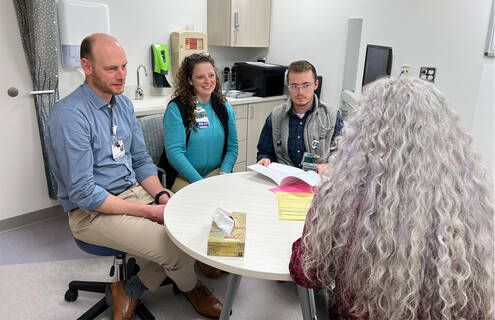
The pilot clinic focuses on seriously ill patients, who are referred for an hour-long visit at the clinic with Dexter, as well as a Cheshire Family Medicine resident and physician.
The conversation focuses on the patient’s medical wishes, including identifying a power of attorney, clarifying their CPR status and any other medical intervention options. After having their questions answered, patients leave the visit with advance directive forms to fill out, which will then get recorded in their electronic medical record (EMR).
Beyond these forms, the team also writes a detailed note in the patient’s EMR that outlines what matters most to the patient and medical scenarios they would want to avoid.
By better understanding patients’ values and wishes, Cheshire has been able to ensure a patient’s care needs are met. For example, some seriously ill patients would prefer to enter hospice care rather than spending their final days in the hospital.
This has resulted in a reduction in inpatient mortality rates at Cheshire, according to recent data from the Centers for Medicare and Medicaid Services.
“This work is about understanding our patients and using their values and wishes to help us individualize their care,” said Gerard Kiernan MD, FAAFP, FHM, hospitalist and faculty member of Cheshire’s Family Medicine Residency program. “It’s all about getting people the right care, at the right time, at the right place.”
For more information on advance care planning, talk to your primary care provider.